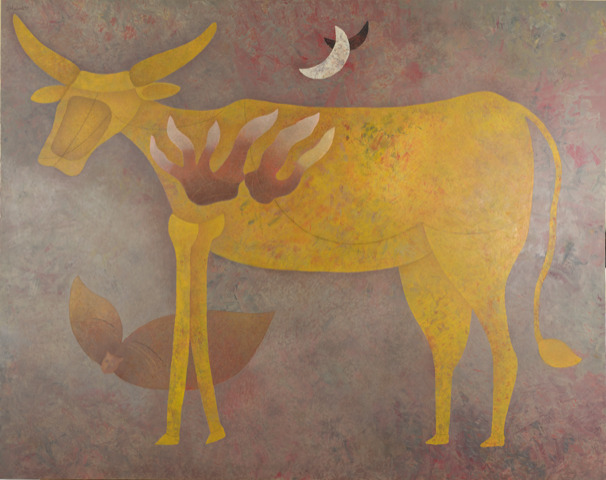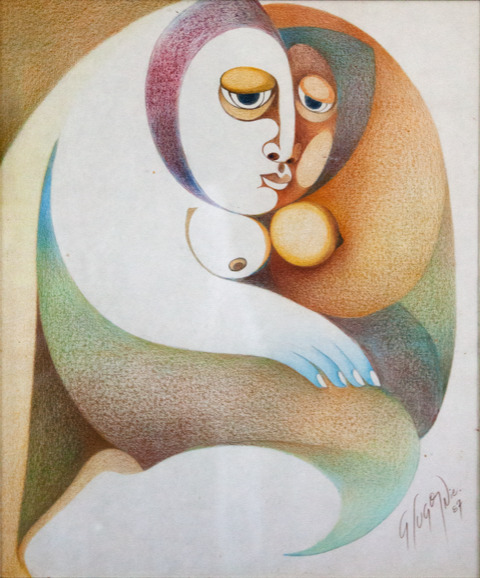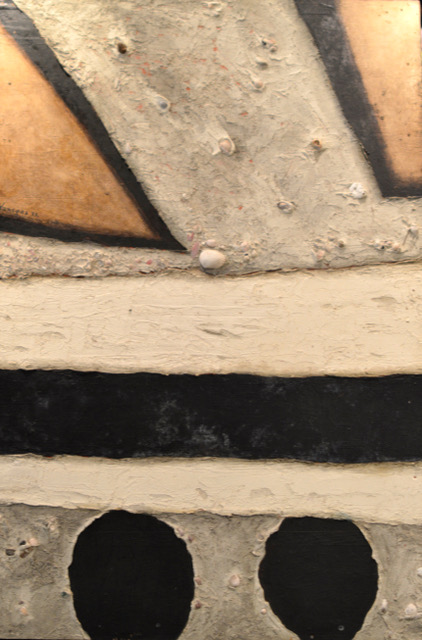
In 1963, after almost a decade of work and study in the United States, Italy, and France, Aróstegui returned home. While in Europe, he had met Amaru Barahona, a writer from Costa Rica, and discovered that they shared many concerns about the suffering of the working class in their countries. Back home in Central America, they reached out to César Izquierdo (1937-2015), a like-minded artist from Guatemala, and the three established a meeting place where artists, poets, and intellectuals could discuss their radical political ideas without fear.
They called themselves “Praxis” (practice, as distinguished from theory), and put together a manifesto that laid out their goals and principles. Their motto: Action, dynamism, and a permanent state of restlessness. And on August 23, 1963, they opened their headquarters – the Galería Praxis – in Managua.
The fledgling movement was composed chiefly of artists who had studied with Rodrigo Peñalba. It included Leoncio Sáenz, Genaro Lugo (1933-2010), Leonel Vanegas (1942-1989), Luis Urbina (1937-2005), Noel Flores (b.1940), Arnoldo Guillén (b.1941), Orlando Sobalvarro (1943-2008), and Dino Aranda (b.1945).
There came a moment when [Nicaraguan] painting seemed to be at a standstill,” said Aróstegui. “Students from the school would go to the shores of Lake Managua where there were miserable people in cardboard houses, and from that they would paint something beautiful. Those of us in Praxis said no, paintings can’t always continue being pretty, touristy. Instead, we have to show the reality of the country we are living in.”
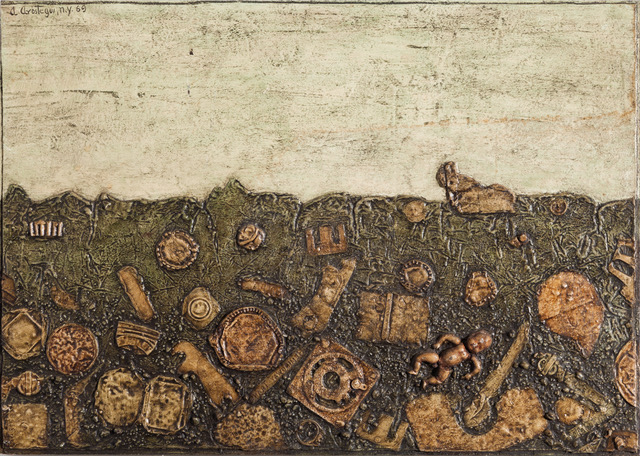
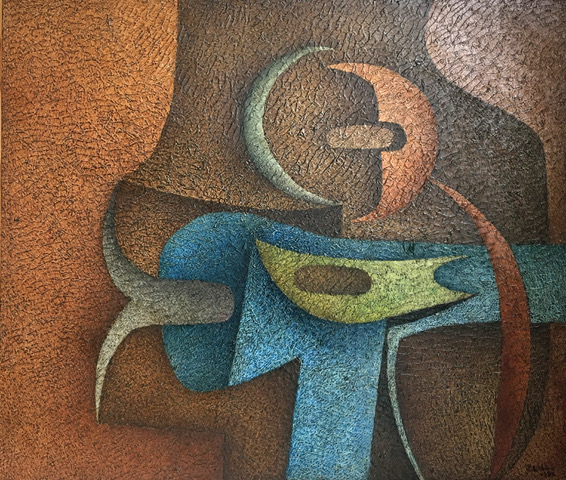
The influential magazine Visual Arts, published by the Organization of American States (OAS), began publishing the works of Praxis. As a result of this exposure, Praxis artists received many invitations from abroad. Some participated in important international events, including the Concurso de la Xerox in Panama. They exhibited at the Instituto de Cultura Hispánica in Spain and in Mexico’s fine arts museums.